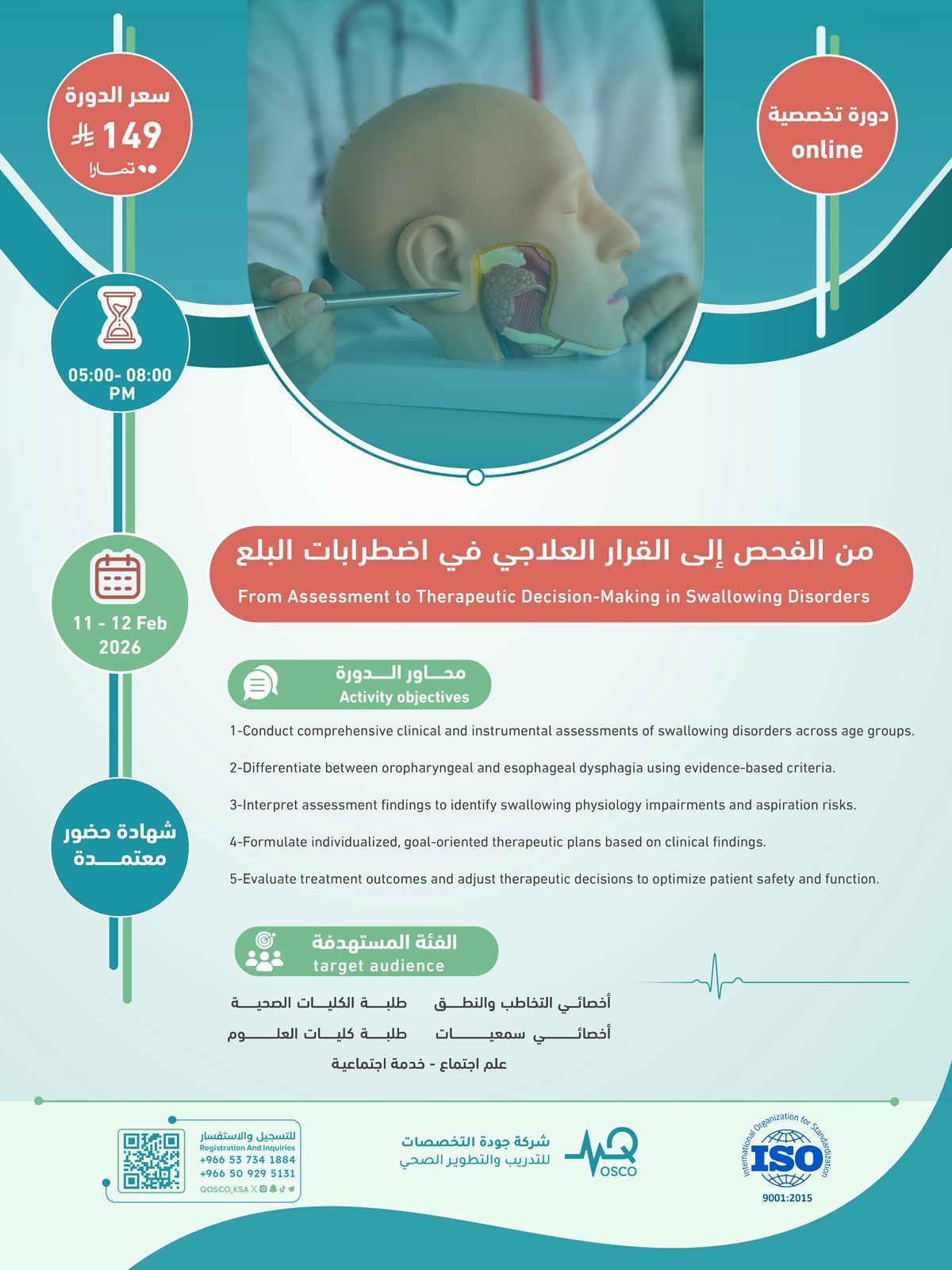
من الفحص الى القرار العلاجى فى اضطرابات البلع - 2️⃣
تفاصيل الدورة
-
ما سوف تتعلم فى هذه الدورة
1-Conduct comprehensive clinical and instrumental assessments of swallowing disorders across age groups.
2-Differentiate between oropharyngeal and esophageal dysphagia using evidence-based criteria.
3-Interpret assessment findings to identify swallowing physiology impairments and aspiration risks.
4-Formulate individualized, goal-oriented therapeutic plans based on clinical findings.
5-Evaluate treatment outcomes and adjust therapeutic decisions to optimize patient safety and function.
عن الدورة
- التصنيف دورات أونلاين ( تخصصية ) معتمدة من شركة جودة التخصصات بشهادة حضور
- السعر 149 ريال سعودى
- اللغة العربية و الانجليزية
- المدة2 ايام
- شهادة اتمام الدورة